Best Recovery Tools for Runners
The best first recovery tool for most runners is a plain foam roller: cheap, durable, and it covers every major muscle group in your legs. Add a massage ball for feet and glutes, and step up to a massage gun when you want the same work with less effort.
Treat these as a comfort upgrade, not a cure. One honest note before the shopping list. Recovery tools can help your legs feel looser and may ease soreness. But none of them replace the real recovery drivers: sleep, easy days, and sensible mileage.
This article contains affiliate links. If you buy through them, we may earn a small commission at no extra cost to you.
Here are the picks worth starting with.


What recovery tools actually do
Every tool here just presses on a muscle, and that is the whole trick. Every tool on this page does a version of the same thing: it presses on a muscle. That pressure can reduce the feeling of tightness and take the edge off sore legs after running, at least for a while.
The research on longer-term benefits is mixed, so buy for comfort and consistency, not miracles. And when your legs are trashed, the best tool is still a proper rest day.
Foam rollers: the default pick
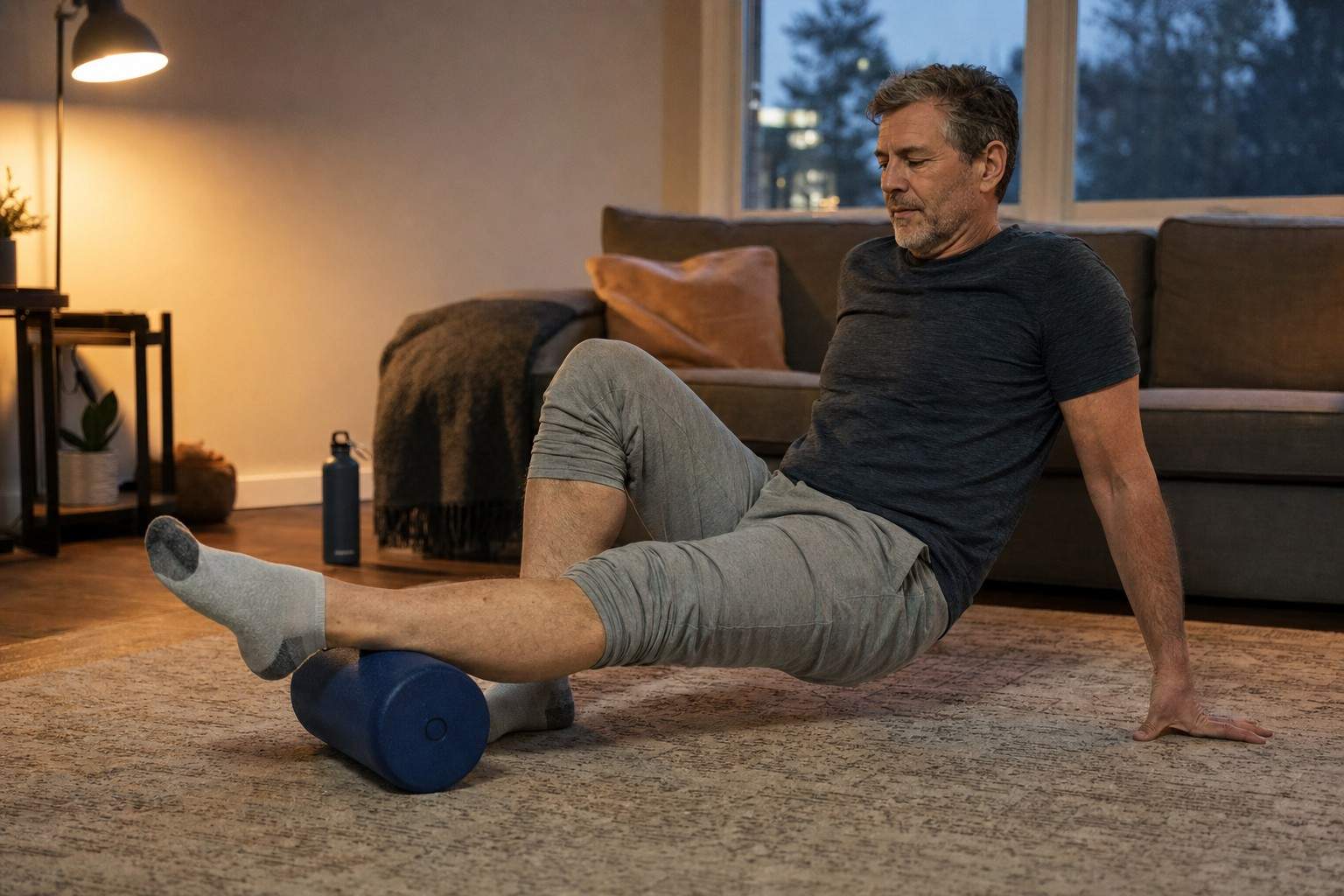
A medium-density roller is the right starting point. Soft rollers do too little once you adapt. Very firm or aggressively textured ones make beginners tense up, which defeats the purpose.
If you already roll regularly and want more, a vibrating foam roller adds intensity without extra pressure. Technique matters more than the tool, though, so review how to foam roll after running before you upgrade anything.
Massage balls and roller sticks: small, targeted, travel-proof
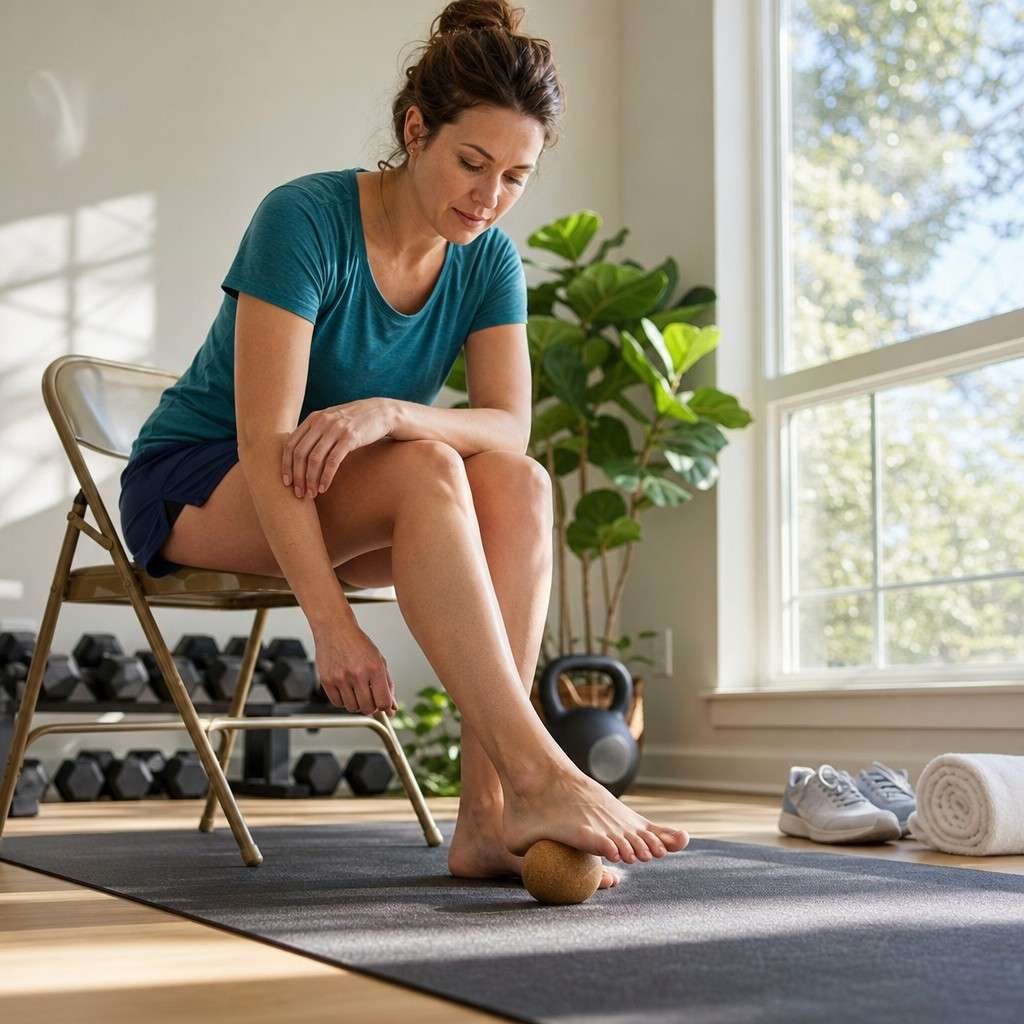
A roller is clumsy on feet, hips, and glutes; that is massage ball territory. A roller is clumsy on feet, hips, and the deep spots in your glutes. That is massage ball territory. A firm ball digs into one spot at a time. A massage ball set with two or three sizes covers everything from plantar fascia to hip rotators.
A roller stick does the roller’s job with your arms instead of your body weight. It is easier to control, kinder on tender calves, and it packs into a race-weekend bag.
Massage guns: effort-free pressure
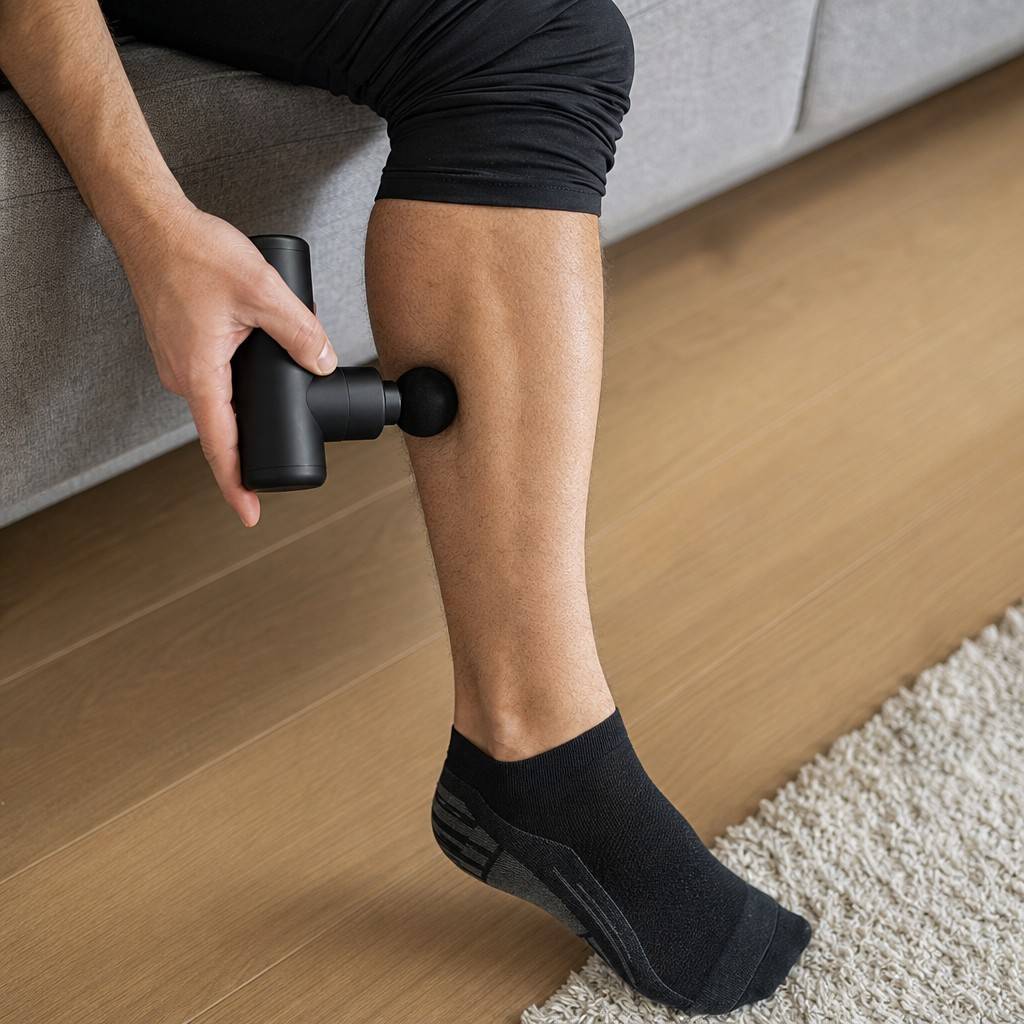
A massage gun’s real advantage is laziness, in the best sense. A massage gun delivers rapid percussion to the muscle. No floor work, no body-weight gymnastics, just point it at the muscle for a minute or two.
Use the softest attachment, keep sessions short, and stay on muscle. Never run it over bones, joints, or the front of your neck. If a spot is painful rather than tender, leave it alone.

Compression gear: the convenience tier
Compression gear is the luxury tier: buy it for the ritual, not because training demands it. Compression sleeves are cheap and comfortable, and many runners like wearing them after long runs. Full compression recovery boots automate the squeeze and feel fantastic. But they are a luxury: buy them for the ritual, not because your training demands them.
When to use what
| Situation | Best tool |
|---|---|
| After a normal run | Foam roller, 30 to 60 seconds per muscle group |
| Sore feet or deep glute spots | Massage ball |
| Tender calves that hate the roller | Roller stick |
| Low motivation, tired evening | Massage gun on the soft attachment |
| Race weekend travel | Ball and stick in the bag |
| Legs still heavy the next day | Easy day or rest, tools optional |
Soreness itself is not an emergency. If you are unsure whether to head out at all, here is how to judge running with sore legs.
Bottom line
A tool only works if it lives next to the couch and actually gets used. Start with a medium-density foam roller and a firm massage ball; together they cover a runner’s whole lower body for very little money. Add a massage gun if the floor routine never happens, and treat compression boots as the reward tier. Whatever you buy, the tool only works if it lives next to the couch and actually gets used.