Best GPS Running Watches for Pace Tracking
The best GPS running watch for most runners is a mid-range model from Garmin’s Forerunner line or the COROS Pace line. Both track pace accurately, run for hours on GPS, and include real training features, without charging you for maps and titanium you may never use.
You do not need the most expensive watch on the shelf. If what you want is your pace, your distance, and proof you are improving, this guide sorts the market into three tiers and covers what actually matters for pace accuracy.
This article contains affiliate links. If you buy through them, we may earn a small commission at no extra cost to you.
Before the details, here is what runners are buying right now.

- Easy-to-use running watch monitors heart rate (this is not a medical device) at the wrist...
- Battery life: up to 2 weeks in smartwatch mode; up to 20 hours in GPS mode

- Built-in GPS for Accurate Outdoor Tracking – Tired of carrying a bulky phone during long...
- Bluetooth Calling & Smart Notifications – Still missing important calls while your phone...

- Easy-to-use running smartwatch with built-in GPS for pace/distance and wrist-based heart...
- Up to 11 days of battery life in smartwatch mode and up to 19 hours in GPS mode
- Easy-to-use running watch monitors heart rate (this is not a medical device) at the wrist...
- Battery life: up to 2 weeks in smartwatch mode; up to 20 hours in GPS mode

- STYLISH DESIGN, VIBRANT DISPLAY: The lightweight aluminum build blends effortless style...
- ALL-IN-ONE ACTIVITY TRACKING: The Amazfit Bip 6 fitness tracker watch offers 140+ workout...
What matters for pace tracking
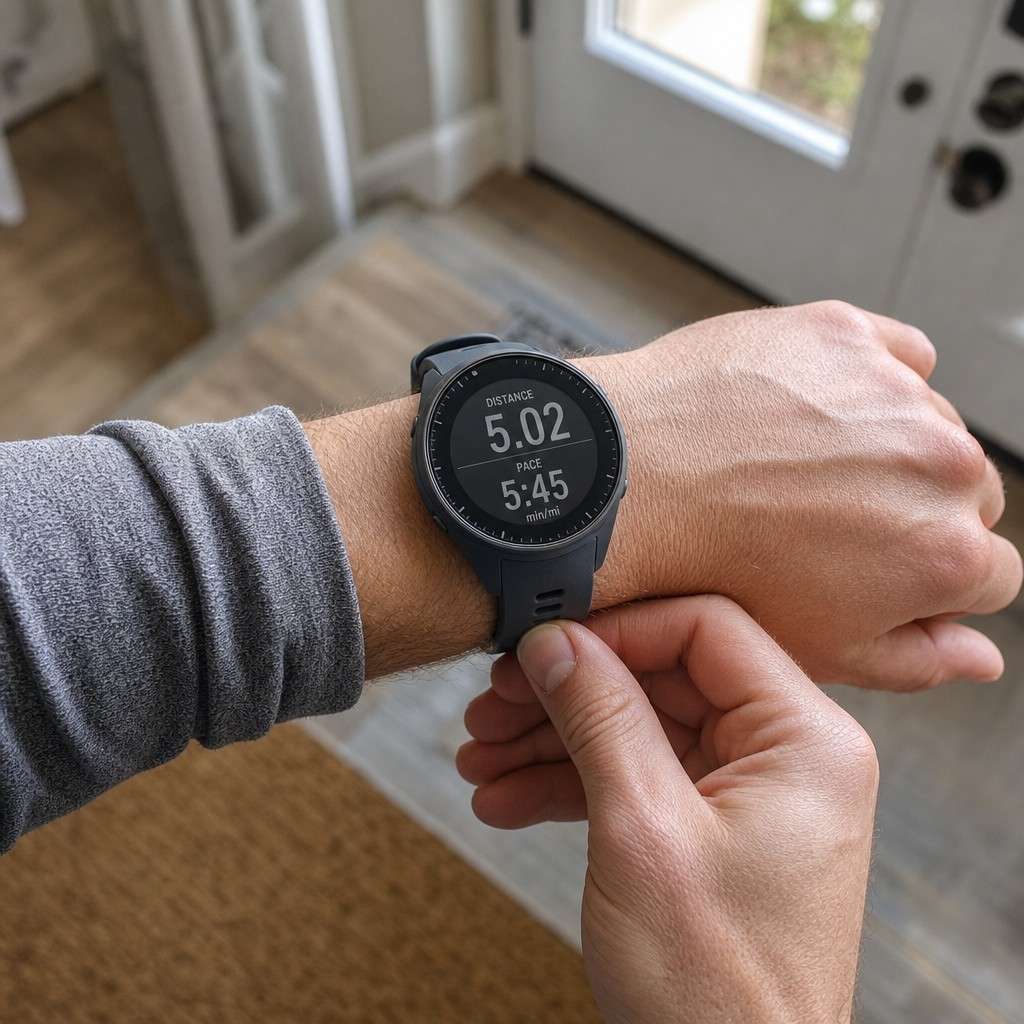
Only a handful of things count for pace. Watch marketing leans hard on sleep scores and stress graphs, but the list below the fold is what actually matters.
- GPS quality. Multi-band (dual-frequency) GPS holds a cleaner line among tall buildings and under tree cover, which is where cheap watches drift.
- Instant pace vs. lap pace. Instant pace jumps around on every watch because raw GPS is noisy. Lap pace or average pace is the steadier number to run by.
- Pace alerts. A vibration when you drift too fast or too slow beats staring at your wrist, especially in a race.
- GPS battery, not standby battery. The number that matters is hours of continuous GPS tracking. Long runs and marathons eat it fast.
- Buttons. Physical buttons work with sweaty fingers and gloves. Touchscreens do not always cooperate at mile 18.
The numbers only help if you know how to read them. Start with what pace actually means, then check where your times sit against a good 10K time for your age.
Budget: the basics done well
Entry-level GPS watches now do the core job reliably. Distance, pace, time, and a simple log of your runs are covered. Brands like Amazfit dominate this tier, and browsing Amazfit GPS running watches shows how much watch you can get for surprisingly little.
The trade-offs are real but tolerable. You give up multi-band GPS, deeper training metrics, and some build quality. One check before buying: make sure the watch has its own GPS chip and is not just reading location from your phone.
Mid-range: where most runners should buy

This is the sweet spot. Garmin’s Forerunner series is the default running watch for a reason: it is built around running first. Pace alerts, structured workouts, interval timers, and training history actually help you improve.
The strongest challenger is the COROS Pace line. It has built a loyal following among runners for its light weight and unusually long battery life. Comparing current COROS Pace watches against a similarly priced Forerunner is the single most useful comparison shop you can do in this tier.


Premium: maps, metal, and multi-band
Premium buys you maps, materials, and headroom, not more accurate pace. Watches like the Garmin Fenix series and the Apple Watch Ultra add full onboard maps, rugged builds, and the best multi-band GPS available.
Here is the honest part: for plain pace tracking, a premium watch is not much more accurate than a good mid-range one. You are paying for navigation, materials, and battery headroom.
Worth it for trail and ultra runners, optional for everyone else.
What about a smartwatch or your phone?
If you already own a smartwatch, start there. An Apple Watch or Galaxy Watch tracks runs perfectly well for casual use. The compromises show up as runs get longer: shorter GPS battery life, touch-first controls, and typically daily charging.
Your phone is the free option, and a fine one when you are starting out. Pair a running app with a comfortable way of carrying your phone while running.
Expect rougher instant pace than a wrist watch, since the phone sits in a pocket or belt and samples your position less cleanly.
Put the numbers to work
A watch tells you the number. Context tells you what to do with it.
Once yours starts logging runs, check how your pace compares with average running speeds. Then set a target and let the pace alerts hold you to it.
Bottom line
Buy a mid-range running watch unless you have a specific reason not to. A Forerunner or a COROS Pace covers everything pace training asks of a watch.
Go budget if you mainly want distance and time logged, and go premium only if maps and multi-week battery genuinely matter to your running.