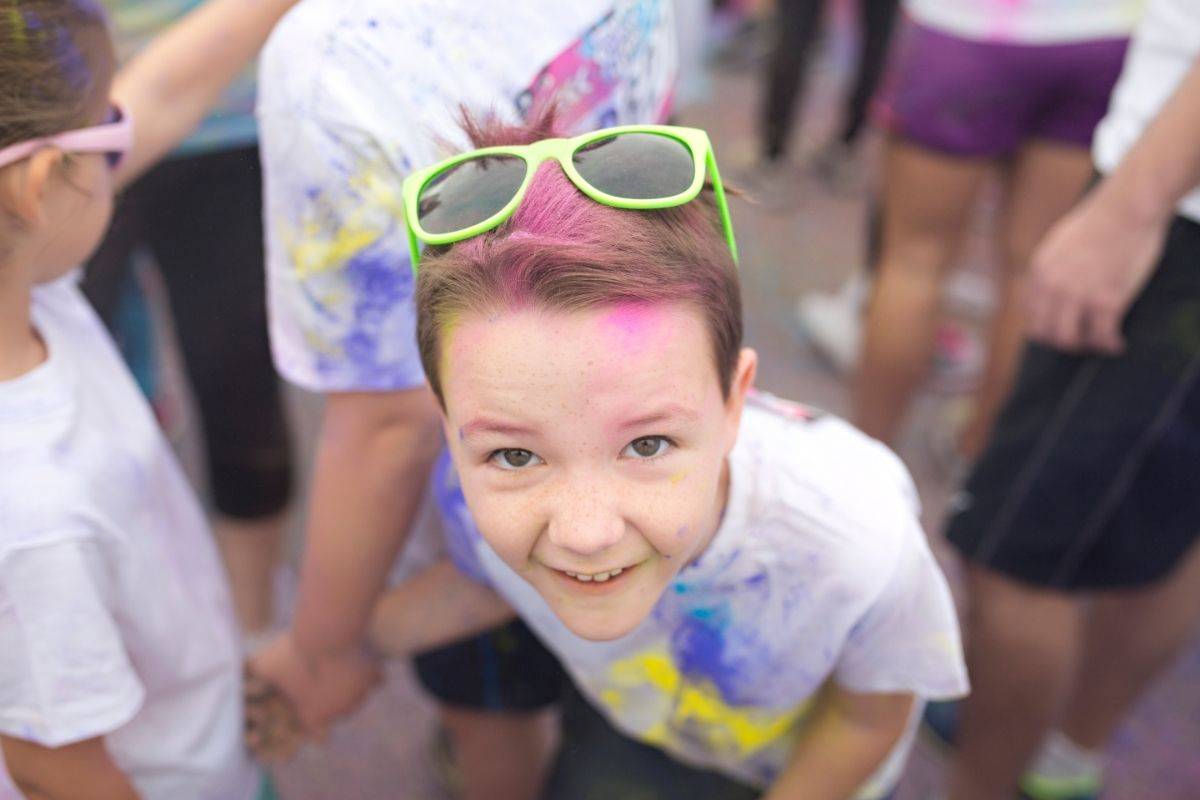
What Is a Color Run at School (And How To Do It)?
A school color run is an untimed fun run for students, built around short laps rather than a full 5K. Volunteers dust the kids with colored powder at stations along the way. Most schools run it as a fundraiser, pairing the powder with pledges, entry fees, or sponsorships.
Done well, it takes a few weeks of planning, a handful of volunteers, and a clear safety plan. This guide walks through the timeline, the powder math, and the fundraising models that actually bring in money.
This article contains affiliate links. If you buy through them, we may earn a small commission at no extra cost to you.
What a school color run is
Students walk or jog a short course while volunteers throw colored powder at them from stations spaced along the route. The color throwing itself is inspired by the Hindu festival of Holi, filtered through a school-friendly, untimed format.
Schools have two paths. Run it themselves with staff and parent volunteers, or hire an outside organizer to handle logistics, powder, and insurance.
Both work, and the right call usually comes down to how much volunteer time the school has to spare.
Two companies that run school color run programs are schoolathon.org and myfunrun.com. Both supply powder, staffing, and a fundraising structure, which trades cost for less work on your end.
If you go the DIY route, start with the principal, not the powder order. Get sign-off on the date and the space before you promise anything to parents or teachers.
Once that is locked in, loop in classroom teachers early so the event lands in the school calendar and not against a test week.
The quick plan
Here is the planning timeline that keeps a school color run on track from first approval to cleanup.
| When | What to do |
|---|---|
| 6 to 8 weeks out | Get principal approval, pick a date, recruit volunteers |
| 4 weeks out | Send parent consent letters, order powder, plan the route |
| 1 week out | Confirm volunteers, brief teachers, check the weather |
| Day of | Set up stations, mark a powder-free zone, assign a cleanup crew |
Powder, stations and volunteers
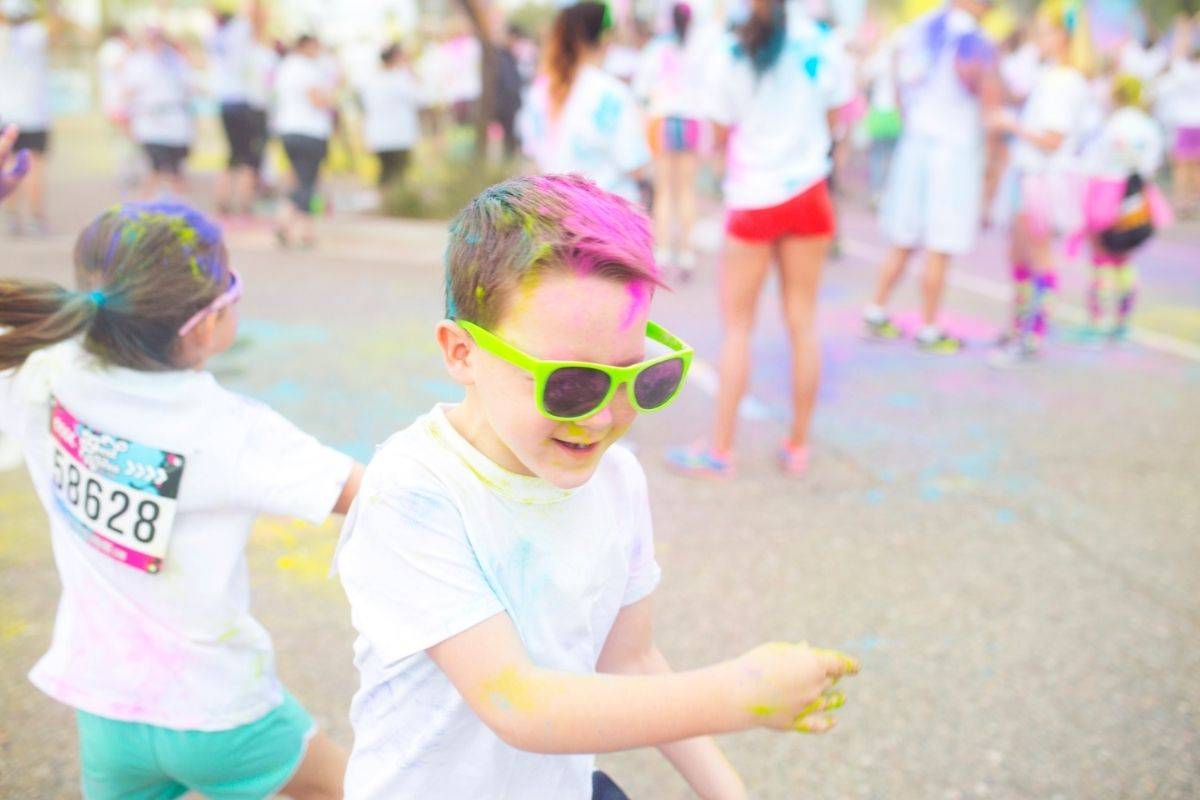
Most school color runs use 3 to 5 color stations along the route.
Plan on 1/2 lb of powder per participant for 3 stations, up to 1 lb per participant for 5 stations.
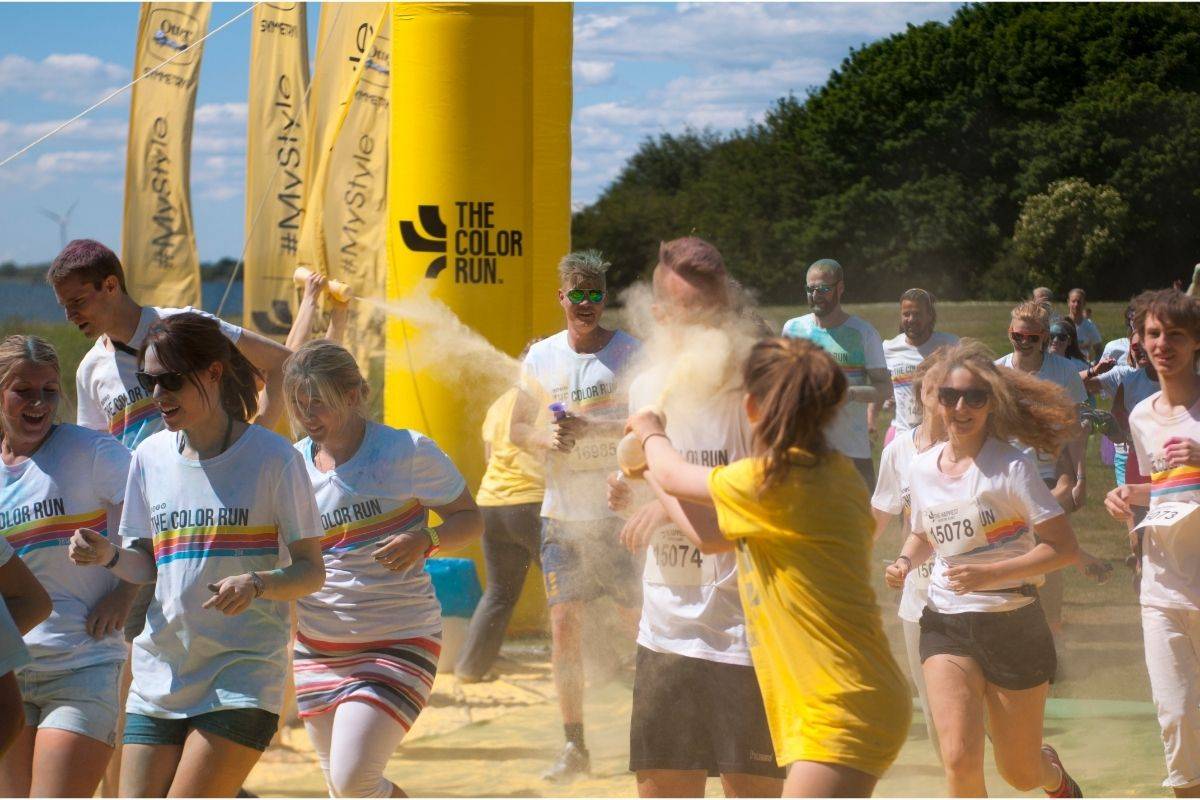
Staff each station with 2 to 4 volunteers. Powder is usually handed out in small cups or thrown from squeeze bottles, and each station typically sticks to one color.
Have volunteers aim below the shoulders, never at the face.
Assign one volunteer per station to restock cups or bottles so the line keeps moving. A second volunteer can manage the flow of runners past the station. That matters more than it sounds once 50 or more kids are lapping the same course.

For the exact pounds and cost for your headcount, our color powder calculator does the math before you place an order.
How far should the kids run
Distance should scale with age, not with what a typical adult color run looks like. These are rough guidelines, not fixed rules.
- Youngest kids (elementary, early grades): a short lap course of about 1 km.
- Upper elementary: 2 to 3 km.
- Middle school and high school: can handle a full 5K.
Laps around a field beat a long point-to-point route. A loop is easier to supervise, and kids pass the color stations several times instead of once.
Mixing age groups on the same course also works. Have younger kids start their laps earlier, or run an inner loop while older students take the outer one. That way everyone finishes around the same time without the youngest kids trailing far behind.
Fundraising models that work
- Pledge per lap. Families collect pledges for each lap a student completes, which rewards participation over speed.
- Flat entry fee. One price covers a white event shirt and a color packet, so the fee itself is the fundraiser.
- Local business sponsorships. Businesses sponsor a station in exchange for a banner or a shoutout on the day.
- Add-ons. A bake sale or a photo booth next to the finish line adds extra revenue without much extra planning.
Safety rules
Run properly, a color run is a low-risk event. That does not mean no rules.
Set these before the day starts, and put them in writing for volunteers as well as parents.
- Powder aimed below the shoulders at every station, never at the face.
- A powder-free lane for kids with asthma or sensitive lungs. A bandana or mask helps, and keep an inhaler nearby.
- Sunglasses or goggles for eye protection.
- Watch for slippery powder buildup on paved surfaces.
- Enough adult supervision at each station and along the route.
- Written parent consent collected before the event.
How long the event takes
The run itself takes 20 to 40 minutes, depending on the age of participants and the number of laps. Plan 2 to 3 hours total once setup, the color throws, and cleanup are counted in.
The bottom line
A school color run works because it is simple: a short loop, a few color stations, and a fundraising hook families already understand. Plan the timeline, order enough powder, and set the safety rules before the date locks in.
Once families are signed up, share our guide on what to wear to a color run so nobody shows up in something they mind ruining.