How Much Color Powder Is Needed for a Color Run? + Helpful Tips
Plan on at least 1/2 lb (about 227 g) of color powder per participant with 3 color stations. With 5 stations, plan up to 1 lb (454 g) per participant. Multiply that per-person figure by your headcount and you have your order.
Color Powder Calculator
Work out how much powder your color run needs before you order.
Enter your participant count and how many color stations the course will have.
- In kilograms
- Per station
- Budget, low end
- Budget, high end
Amounts follow standard supplier guidance: half a pound per runner with 3 stations, a full pound with 5. Bulk powder costs roughly $4 to $5.50 per pound in 2026. Order a little extra rather than running out.
Get the station count and the headcount right first. Everything else, including your budget, follows from those two numbers.
Guessing low is the most common planning mistake. A station that runs dry mid-race is hard to fix once runners are already on course.
This article contains affiliate links. If you buy through them, we may earn a small commission at no extra cost to you.
How much powder per participant
The number of color stations on your course sets the baseline. More stations mean more chances for runners to get hit, so each station needs its own supply.
Headcount is the other half of the equation. A small local run of 50 people needs a fraction of what a 500-runner event needs, even with the same number of stations.
| Number of stations | Color powder per participant |
|---|---|
| 3 | 1/2 lb (about 227 g) |
| 4 | 3/4 lb (about 340 g) |
| 5 | 1 lb (about 454 g) |
Two worked examples show how that scales. With 100 participants and 3 stations, you need 50 lb of powder total, about 17 lb per station.
With 200 participants and 5 stations, you need 200 lb total, about 40 lb per station.
Order a little extra past the baseline. Some powder always misses, spills, or gets used heavier at a popular station near the finish line.
The calculator above runs this same math for your own headcount and station count. Skip the arithmetic and go straight to a number you can order against.
What color powder is made of
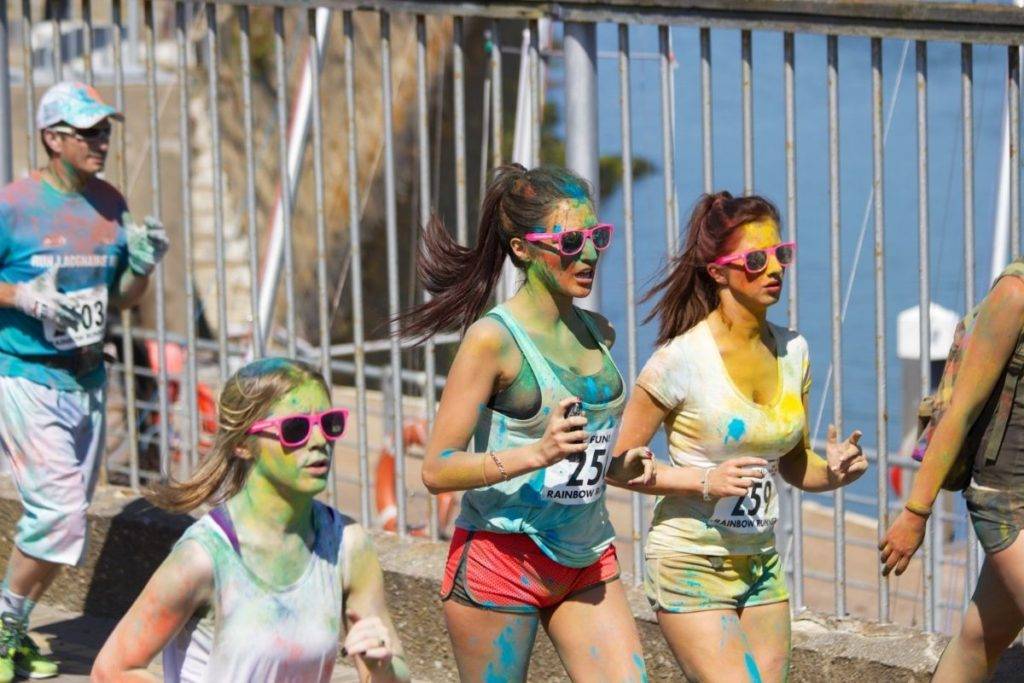
Commercial Color powder is made from cornstarch plus FD&C dyes approved by the FDA for food and cosmetic use. That combination is what makes it safe to throw at a crowd of runners.
It is designed to wash out with plain water, soap, and regular laundry detergent. White fabric is the exception worth knowing about.
A faint tint can linger on white clothing even after a wash, so plan your race-day outfit with that in mind. Darker colors and prints hide any residual tint far better than a plain white shirt.
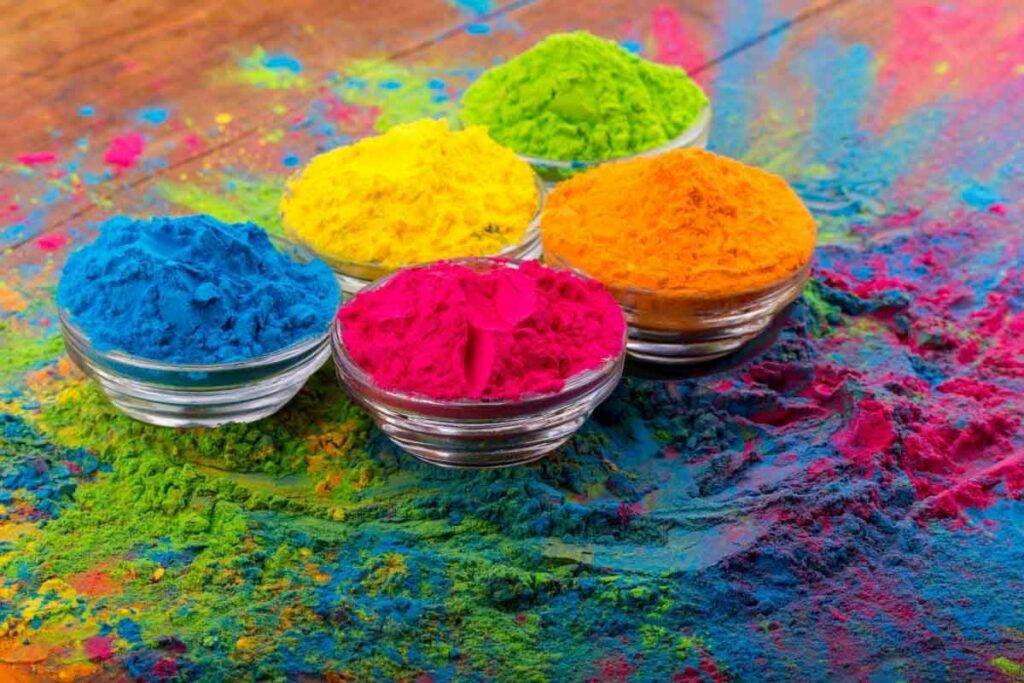
What it costs in 2026
A 25 lb bag of a single color runs from about $98 on sale, against a regular price of about $119.
A pack of 5 colors covering 25 lb across five colors costs about $135, and a 30 lb six color pack runs about $160.
A small 5 lb bag is about $32.
In bulk that works out to roughly $4 to $5.50 per pound. For 100 runners across 3 stations, that is 50 lb of powder. Budget roughly $200 to $275 if you order a 25-pound bag or two to cover it. Buying larger bags instead of several small ones is almost always the cheaper route per pound.

Squeeze bottles cost a couple of dollars each. With 3 stations staffed by 2 volunteers apiece, a dozen or so bottles covers the event. Add a few spares for refills.
Buying a handful more than the minimum is cheap insurance against a bottle cracking mid-event.
How the powder is thrown
Each station needs 2 to 4 volunteers who throw the powder as runners pass. They work from small cups or from 16 to 24 oz refillable squeeze bottles, refilling in the gaps between groups of runners. Give every volunteer a couple of bottles so nobody is left standing empty-handed when a pack of runners comes through.


Most events keep one color per station, which makes restocking simple and gives runners a rainbow effect by the finish. Volunteers should always aim below the head.
Powder in the eyes impairs vision, and that is the one real hazard worth actively managing at every station. A quick briefing before the race starts is usually enough to keep every volunteer aiming low.
Runners with asthma or sensitive lungs should keep an inhaler nearby and consider a bandana or mask at the stations. Sunglasses or safety glasses give extra eye protection for anyone worried about a direct hit.
Anyone supervising kids should stay close, since powder underfoot on hard pavement can get slippery fast.
Which colors to use
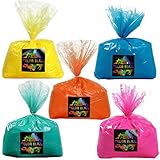
Pink, blue, yellow, and orange are the staple colors at most color runs. Adding more colors beyond those four gives a more vibrant finish once everyone crosses the line.
Frequently asked questions
Does the powder wash out?
Yes. Dust off as much dry powder as you can before washing anything.
Then run a cold wash, since sooner is always better than later. For fabric-specific tips, our guide on what to wear to a color run covers cleanup in more detail.
How messy is a color run?
Very. Powder ends up on the ground, on gear, and on anything near a station.
Laying tarps under the color stations cuts down cleanup significantly. A few extra trash bags help with stained clothing and shoes after the race.
What if it rains?
Light rain is fine, and the colors often look even brighter when wet. Postpone only for severe weather, where safety becomes the bigger concern.
Final thoughts
Get the headcount and station count right, order a little extra powder, and the rest of the planning falls into place. For the school-specific version of this event, see our full school color run playbook, which covers the extra supervision and safety steps a younger crowd needs.