Color Run Origin: Where Did The Color Run Originate?
The Color Run was created by event producer Travis Snyder and first held in March 2011 in Phoenix, Arizona, with about 6,000 runners. Its color throwing borrows from Holi, the Hindu festival of spring.
What started as a single 5K grew into the largest race series in the country within two years. Here is how it happened, where the colors actually come from, and what the event looks like in 2026.
The short history
The Color Run spread fast. The table below traces the key points, from the first Phoenix race to the 2026 comeback tour.
| Year | What happened |
|---|---|
| March 2011 | First event, Phoenix, Arizona. About 6,000 runners. |
| 2012 | Held in over 50 North American cities. More than 600,000 participants, the largest 5K series in the US. |
| 2014 | Peak year, about 300 events in over 50 countries. |
| 2026 | Comeback tour after a quiet stretch. Stops include Miami, Portland, and San Diego. |
Three influences shaped the format: paint parties, Disney’s World of Color, and Holi, the Hindu spring festival. Holi supplied the idea at the center of the whole event, throwing colored powder in celebration.
Holi, the festival behind the colors
Holi is a Hindu festival that celebrates the arrival of spring. It plays out over two days.
The first day centers on bonfires and prayers. The second day is the color throwing, known as Dhulandi among other names, when people cover each other in colored powder to mark the season.
Holi is celebrated primarily in India and, increasingly, worldwide.
The festival carries meaning beyond the color play. The first-day bonfire marks the triumph of good over evil, and the celebration as a whole welcomes spring’s colors and a good harvest season.
The powder throwing that inspired The Color Run sits inside that larger tradition.
Are color runs cultural appropriation?
Borrowing a religious festival’s central image for a commercial 5K raises a fair question. The line between appreciating a tradition and appropriating it is real, and it depends on whether people understand what they are taking part in.
Views differ, including among Hindus themselves. HuffPost collected Hindu voices on both sides of this debate, and the range of opinion is worth reading before you shrug the question off.
Knowing the origins does not mean you cannot run the race. It means showing up with some awareness of where the color came from and why it matters to the people whose festival it is.
Why the format worked
The organizers designed the race around removing every reason not to enter. It is untimed, so nobody finishes last. That is why organizers say it pulls so many first-time 5K runners.
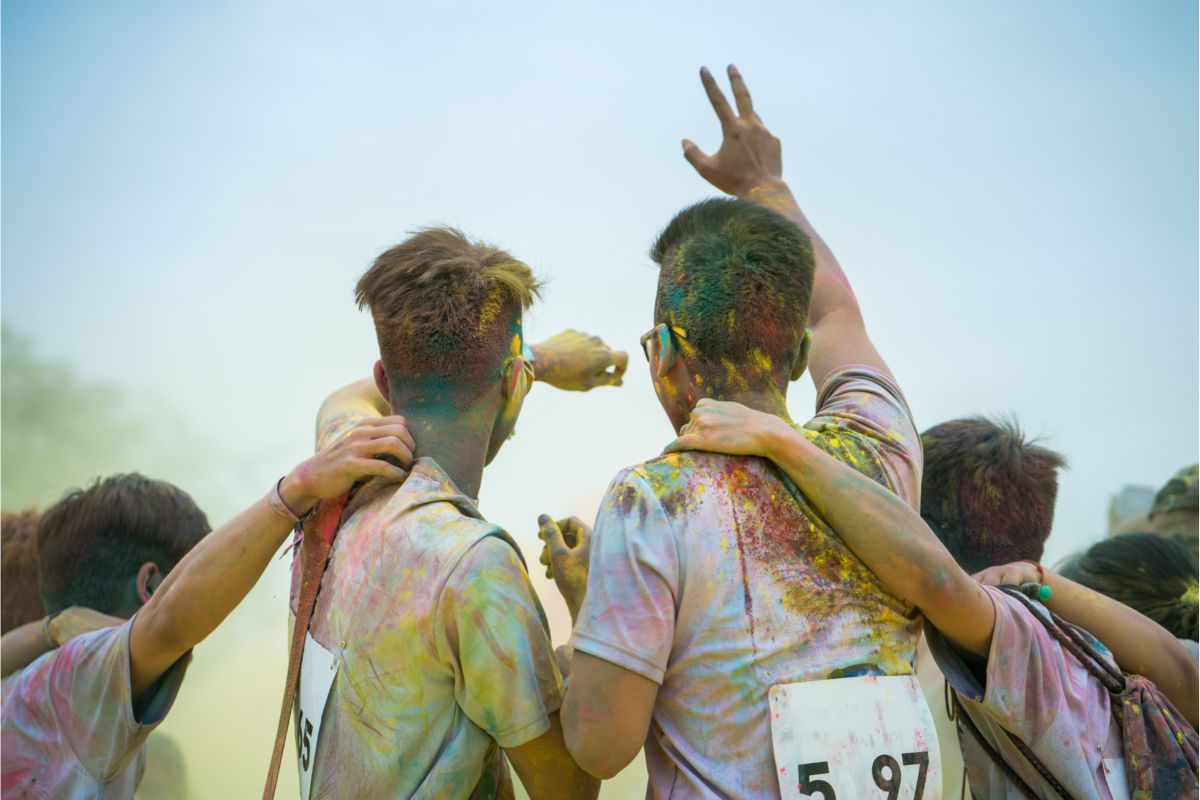
The white shirt is a design choice too. Starting clean and finishing rainbow gives every runner a built-in souvenir and a photo moment. Events often tie in local charity partners, so the day carries a purpose beyond the party.
The Color Run today
After a quiet stretch, The Color Run relaunched with a comeback tour in 2026. Dates listed on the official Color Run site include Miami on August 22, Portland on October 10, and San Diego on October 17. Registration is $54.95.
The format has not changed. It is still an untimed 5K, with color powder thrown at stations along the course and a Finish Festival party at the end.
The tagline remains “The Happiest 5K on the Planet.”
The pitch has not changed either: a race built around fun rather than a finish clock.
The bottom line
The Color Run took a single idea, Holi’s color throwing, and built it into the biggest 5K series in the country within two years. The 2026 comeback tour brings that same format back to Miami, Portland, and San Diego.
If you are planning your own event, see how to organize a color run at school. If you are running one soon, check what to wear to a color run first.