
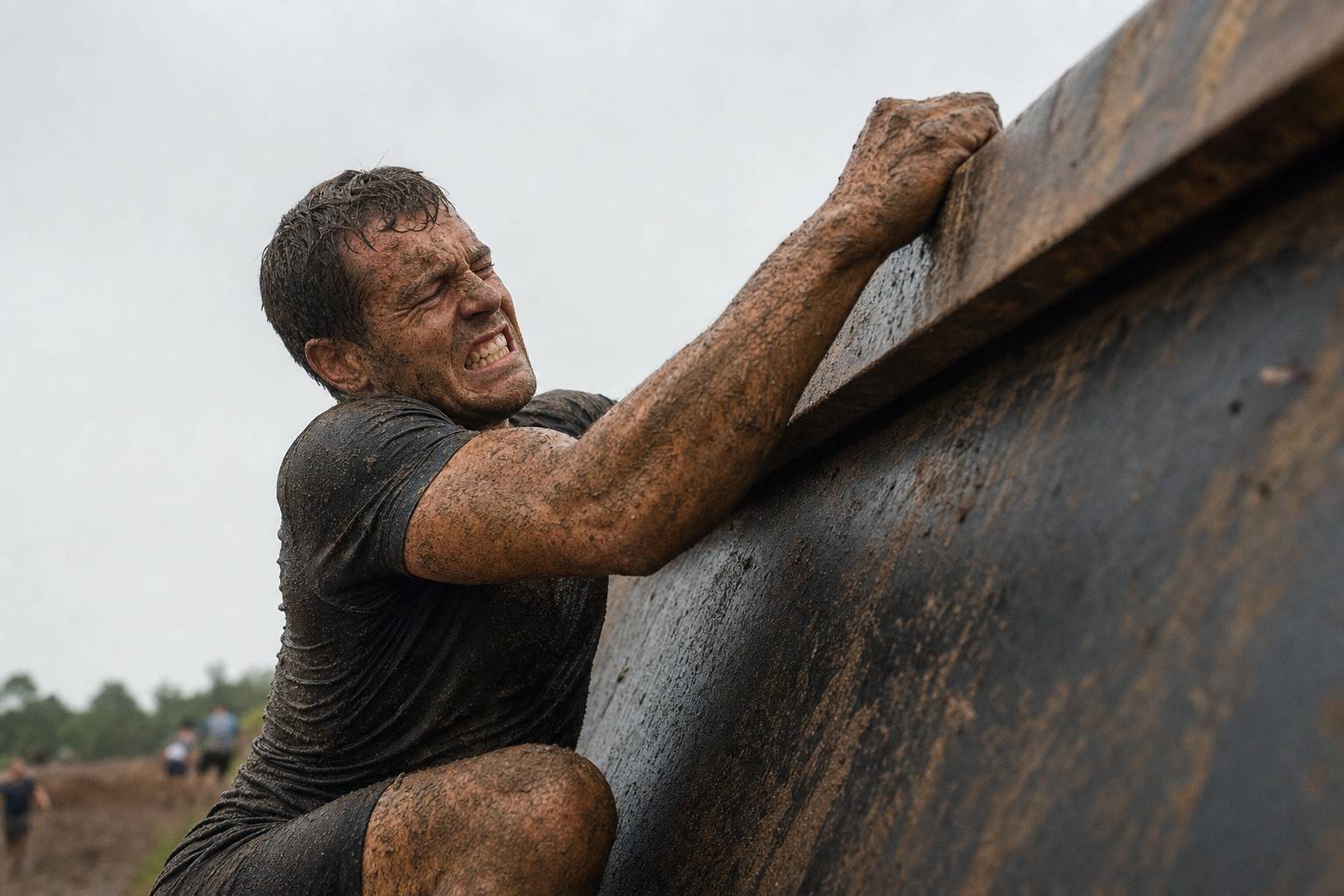
How Hard Is a Spartan Race? Difficulty by Level
A Spartan Sprint is realistic for most people who can jog three miles and climb a few walls. A Spartan Ultra is not, unless you have already finished a Beast and trained for months afterward.
Difficulty in Spartan racing comes from five official levels, not one single race.
Distance, obstacle count, and terrain all shift together as you move up the ladder.
This guide ranks each level on a practical 1 to 5 difficulty scale, built from the distances and obstacle counts below. It is our read of those numbers, not an official Spartan rating.
Then it matches each level to a fitness starting point, so you can pick one you can actually finish.
How hard is each Spartan level?
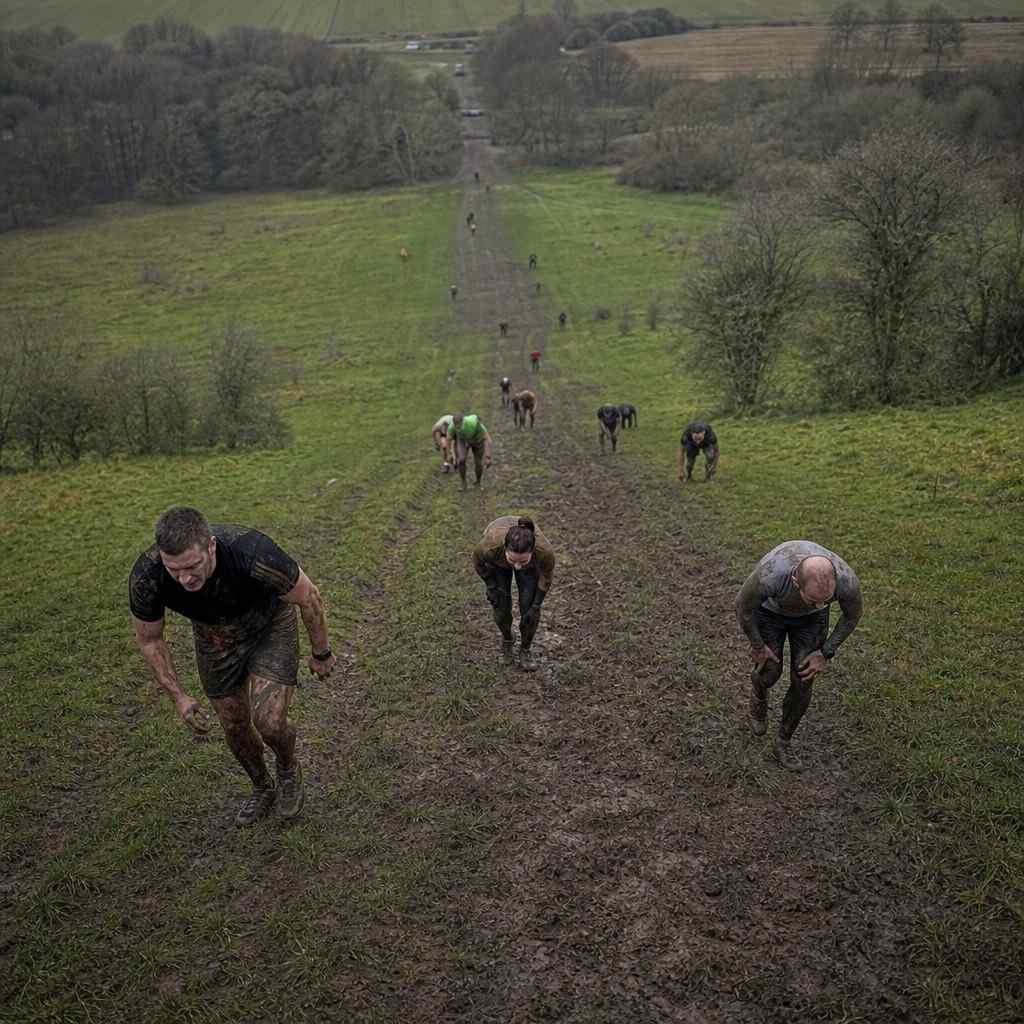
Five official levels run from beginner to expert, and Beast to Ultra is the biggest jump of all.
All five belong to the same branded race series, the Spartan Race, held at venues across dozens of countries each year.
| Level | Distance | Obstacles | Who it’s for | Difficulty |
|---|---|---|---|---|
| Stadion | 5K | 20 | New to obstacle racing, want to skip mud | 1 of 5 |
| Sprint | 5K (3.1 mi) | 20 | First-time racers, casual runners | 2 of 5 |
| Super | 10K (6.2 mi) | 25 | Regular runners with a Sprint behind them | 3 of 5 |
| Beast | 21K (13+ mi) | 30 | Trained runners comfortable with 4 to 15 road miles | 4 of 5 |
| Ultra | 50K (31 mi) | 60, many repeated | Experienced Beast finishers only | 5 of 5 |
Stadion and Sprint share identical numbers on paper. Stadion rates easier here because it skips mud, water, and barbed wire, held instead inside a stadium.
Obstacle frequency actually drops as the levels get longer. Sprint and Stadion pack about six obstacles into every mile, Super about four, and Beast and Ultra closer to two each.
Spartan also runs a separate Kids Race series for ages 4 to 14, covering 0.5 to 2 miles on its own, non-competitive scale.
That 1 to 5 column is a practical read of the numbers above, not an official Spartan difficulty score.
Spartan does not publish one.
Which Spartan level should you start with?
If you can jog three miles without stopping, Sprint or Stadion is a realistic first race.
Your best starting level comes down to two things: how far you can already run, and how you feel about mud, heights, and heavy carries.
- New to running, or wary of mud and heights. Start with Stadion. No mud, no barbed wire, footing stays inside a stadium throughout.
- Already jog a 5K. Sprint fits well. It is the same distance as a training run, plus 20 obstacles to learn on.
- Already have a good 10K time in hand. Super is the next step. The distance will not be your limiter, the obstacles will be.
- Comfortable running 4 to 15 road miles, or on your feet 5 or more hours. Beast is realistic. That range is Spartan’s own training baseline for the race.
- Already finished a Beast. Ultra is what is left, and it is expert-only, with cutoff times set venue by venue.
Many racers do not stop at one level. Finishing Sprint, Super, and Beast in the same season earns the Spartan Trifecta.
None of that is required.
Plenty of racers do one Sprint, decide that is plenty, and never look back.
What actually makes a Spartan hard?

A missed obstacle costs 30 burpees on the spot, no matter how tired you already are.
Every level shares the same obstacle types: wall climbs, a 12 to 16 foot rope climb, monkey bars, and a spear throw. Carries like sandbags, buckets, and Atlas balls show up too, along with barbed wire crawls.
Carries like these tax grip and lower back more than raw running fitness does.
That is one reason strength training pays off as much as mileage.
Fail an obstacle and the penalty is steep. It costs 30 burpees, completed on the spot before you move on.
Miss a grip-heavy obstacle three or four times, and that is over 100 extra burpees stacked onto legs already tired from the course.
Terrain adds a layer the obstacle count does not show.
Off-road trail, mud, and water crossings turn a grip test into a balance test too.
That gets harder as the levels stack, not easier. A missed grip late in a Beast costs more than the same miss early in a Sprint, because more fatigue sits behind it.
That compounds hardest at the very top. The Ultra repeats roughly two Beast-length loops plus a bonus loop, with cutoff times set venue by venue. Spartan and obstacle-race coverage both note that not everyone who starts one reaches the finish.
The mental side runs under everything above. Spartan races are timed and competitive, run in elite, age-group, and open waves. The clock keeps running while you decide whether to even attempt an obstacle you are unsure about.
Frequently asked questions
Five quick answers before you register.
Is a Spartan Race hard?
Yes. Every level is built to be a genuine physical test, not a casual fun run. Spartan describes its own races as “hard, but designed to be achievable for anyone willing to commit.”
How hard is the Spartan Sprint?
Sprint sits at the easy end of the ladder: a 5K with 20 obstacles, built for first-time racers. Most reasonably active adults can finish one with a few weeks of preparation.
How many Spartan race difficulty levels are there?
Five main levels: Stadion, Sprint, Super, Beast, and Ultra. Spartan also runs a separate Kids Race series for ages 4 to 14.
What happens if you fail an obstacle?
You owe 30 burpees, completed on the spot before you continue. It is a real time and energy cost, not a formality.
Do I need to be a runner to do a Spartan Race?
Not only. Grip strength and general fitness matter as much as running ability, especially at Sprint and Super. Beast and Ultra add a real endurance requirement on top of that.
The bottom line
Match the level to the fitness you have now, not the one you are hoping to have by race day.
Spartan difficulty climbs in a predictable line. Stadion and Sprint suit beginners, Super suits intermediate fitness, and Beast demands real training behind it.
Distance sets the floor, but obstacles, the 30-burpee penalty, and slick terrain decide how hard any single level actually feels on race day.
Pick the level that matches where your fitness is today, and the obstacles become the real challenge instead of the distance.