

How to Run 3 Miles Without Stopping (4-Week Plan)
If you can already run 2 miles, 3 miles is about four weeks away. The jump is smaller than it sounds, and the thing that stops most people is pace rather than fitness.
Three miles is 4.83 kilometers. A 5K is 3.11 miles, so once you can run three, a 5K is barely a minute further.
That is the whole reason this distance matters.
How long 3 miles takes
Work from the pace you already run 2 miles at. Nothing about the third mile needs to be faster.
| Your pace | 3 miles | 5K (3.11 miles) |
|---|---|---|
| 9:00 per mile | 27:00 | 27:58 |
| 10:00 per mile | 30:00 | 31:04 |
| 11:00 per mile | 33:00 | 34:11 |
| 12:00 per mile | 36:00 | 37:17 |
| 13:00 per mile | 39:00 | 40:23 |
| 14:00 per mile | 42:00 | 43:30 |
The gap between the two columns is about a minute. People training for a first 5K often do not realise how close 3 miles already puts them.
If you would rather work from your own numbers, the running time calculator converts any pace to any distance.
The 4-week build from 2 miles to 3
Three runs a week, with a rest day between each. Only one run in the week gets longer; the other two stay where they are.
| Week | Run 1 | Run 2 | Long run |
|---|---|---|---|
| 1 | 2 miles easy | 2 miles easy | 2.5 miles |
| 2 | 2 miles easy | 2 miles easy | 2.75 miles |
| 3 | 2 miles easy | 2.5 miles easy | 3 miles, walk breaks fine |
| 4 | 2 miles easy | 2 miles easy | 3 miles continuous |
Adding a quarter or a half mile a week sounds cautious. It is also why this works when jumping straight from 2 to 3 usually does not.
Repeat any week that felt hard. The plan is a shape, not a schedule.
Nobody is marking this.
Measuring the distance
The plan asks for 2.5 and 2.75 miles, so you need a route you trust before any of it means anything.
Three ways, in rough order of how little thought they take.
- A phone app. Any free running app measures the distance by GPS and is accurate enough for this.
- An out and back. Run out for half the distance, turn round, come home. It removes any need to plan a loop.
- A running track. Three miles is a fraction over 12 laps of a 400 metre track, which makes the part laps easy to count.
Twelve laps and a bit.
An out and back has one quiet advantage over a loop. You cannot cut it short without walking home anyway.
Why most people stall at this distance
Two miles is short enough to get away with running slightly too fast. Three miles is not.
That is the whole difficulty, and it is a pacing problem wearing a fitness costume. The fix is the talk test. If you cannot say a full sentence out loud, you are going too fast for the distance.
- Start the third mile slower than feels natural. You will still finish faster than you would have by fading.
- Judge the run by whether you finished it, not by the watch. Pace comes back on its own once the distance is comfortable.
- Do not race your own 2 mile time. A longer run at a slower pace is a different session, not a worse one.
Slower is the answer to most of it.

Walk breaks still count
Week 3 has walk breaks written into it on purpose. Covering the distance comes first, and joining it up comes after.
There is no fitness penalty for walking part of a run. What matters is the time you spend moving and how often you go out. The evidence for that sits in how long most people can run without stopping.
Walking is how you get to three miles, not a sign you have not.
If 2 miles is not there yet
This plan assumes you can cover 2 miles, at any pace and with breaks if you need them. If that is still ahead of you, build it first.
Start with the four week plan for running a mile without stopping, then move up through running 2 miles and come back here.
What 3 miles opens up
Every 5K in the country becomes available to you. Three miles is the fitness; the extra tenth of a mile is a rounding error on race day.
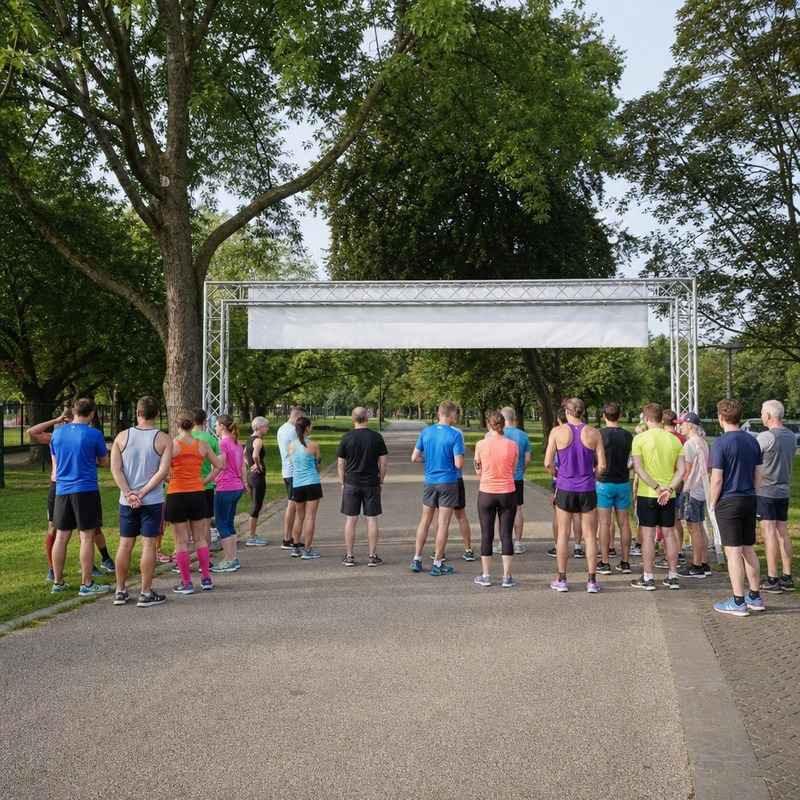
Racing one is a separate skill though, mostly about not setting off too fast in a crowd. The four week 5K plan is built for exactly this point, and it starts from where you now are.
After that the question stops being distance and starts being time. Whether yours is any good depends on your age and sex, which is what a good 5K time sets out.
Cover the distance first. The clock can wait four weeks.