
What To Wear For A Marathon? (Picking the Perfect Marathon Outfit)
Wear nothing new on race day. Dress in the moisture-wicking kit you already tested in training, and dress for 10 to 20 degrees warmer than the temperature at the start line. Your body heats up fast once the gun goes off, so the layers that feel right standing at the corral will feel too warm by mile 3.
This article contains affiliate links. If you buy through them, we may earn a small commission at no extra cost to you.
The golden rule: nothing new on race day
Every item you wear on race day should already have miles on it. New shoes, new socks, a new shirt you have never run in, all of it is a gamble you don’t need to take.
- Test it on a long run first. Wear your full race outfit, shoes included, on at least one training run of 10 miles or more before race day.
- Break shoes in weeks ahead. A stiff, unbroken shoe is one of the fastest ways to end up with blisters by the finish line.
- Watch the forecast, not the calendar. Check the weather in the days before the race and adjust layers accordingly, since conditions can shift fast.
If you are still building your training block, our guide on how to prepare for a marathon covers the run schedule that gets you to race day ready.
Race-day kit, head to toe
A marathon covers a lot of ground, so every item you wear needs a job. Here is what that looks like, piece by piece.
Running shoes
Your shoes matter more than anything else on this list. They need to be broken in, not brand new, and in good shape with no worn tread or breakdown in the midsole.
Shorts and top
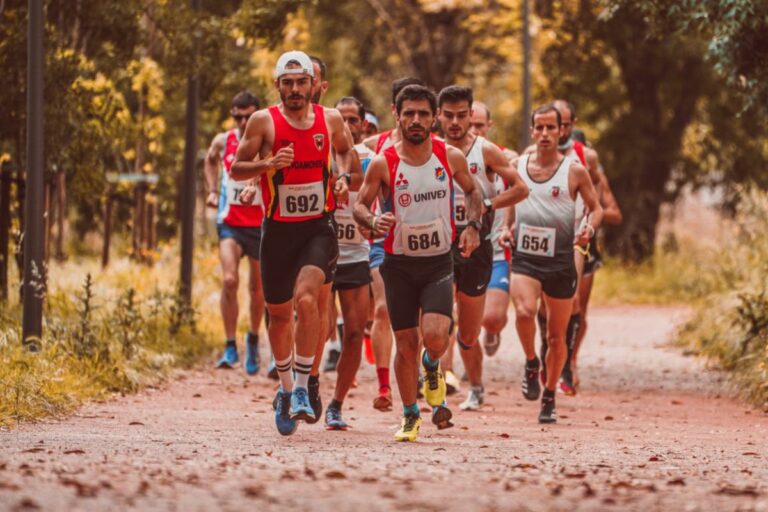
Pick moisture-wicking fabric with good ventilation, not cotton. Cotton holds sweat, gets heavy, and rubs. Shorts should be snug enough to stay put without slowing you down, and loose enough that fabric isn’t grinding against skin for 26.2 miles.
Socks
Skip the cotton crew socks from your dresser drawer. Technical running socks wick moisture away from the skin and reduce the friction that causes blisters over a long distance.
A pair of anti-blister running socks is one of the cheapest upgrades you can make before race day.
Compression gear
Compression sleeves or tights are optional, but many runners find they reduce muscle vibration and help with recovery in the days after. If you already train in them, race day is fine.
If you don’t, this is not the day to start.
Accessories
A cap or visor keeps sun and sweat out of your eyes. Sunglasses help with visibility on bright courses. A running belt or a small pouch holds your phone, ID, and fuel without bouncing.
Speaking of fuel, most marathoners need a plan for mid-race calories. Energy gels tested in training and tucked into your belt or shorts pocket are the standard approach.
If you’re unsure how these pieces come together as a full system rather than a checklist, see our broader breakdown of what to wear when running.

- CARRY YOUR MOST IMPORTANT THINGS WITH YOU: With our running bag, you can take your most...
- FOR ALMOST ALL PHONE SIZES: Almost all smartphones can be conveniently stowed in the main...
- CARRY YOUR MOST IMPORTANT THINGS WITH YOU: With our running bag, you can take your most...
- FOR ALMOST ALL PHONE SIZES: Almost all smartphones can be conveniently stowed in the main...

- [FITS All CELL PHONE] The expandable pocket suitable all kinds of phone, carry your...
- 【NO BOUNCING】Our Running phone holder never bounces or slips while you exercise, fits...
Preventing chafing
Chafing is the most common race-day injury that has nothing to do with fitness. It comes from fabric or skin rubbing the same spot thousands of times over 26.2 miles.
- Apply anti-chafe balm early. Underarms, inner thighs, nipples, and anywhere fabric seams sit are the usual trouble spots.
- Choose seamless or flat-seam fabric. Raised seams that feel fine for an hour become raw by mile 15.
- Avoid anything untested. A shirt that never chafed on a 5-mile run can still chafe at mile 20, so long training runs are the only real test.


- Includes one (1) 1.75-oz. Gold Bond Friction Defense anti chafe stick with aloe
- Gold Bond thigh chafing stick comforts the skin from irritation while offering thigh...


- Prevents and relieves hot spots on feet, and chafed, chapped and cracked skin from head to...
- Suitable for fitness, big and plus sizes, work, military, law enforcement, travel, hot...

- Additional Ingredients To Help Hydrate Skin And Retain Moisture. Rich In Vitamins A, B, E...
- Apply Before You Put On Clothes, On Inner Thighs, Around (Sports) Bra, Wherever Skin Is...
Dressing for the weather
The base layers above stay the same across conditions. What changes is what you add or strip away depending on the forecast.
Cold starts
Add a long-sleeve base layer or arm sleeves you can push down once you warm up. Gloves and a light hat help at the start line and can be stuffed in a pocket later.
Rain
Skip heavy waterproof shells. They trap sweat and end up making you wetter from the inside. A light, breathable rain jacket or vest does more good than a full rain shell ever will.
Heat
Go with the lightest, most breathable shorts and top you own, plus a hat that ventilates rather than traps heat. Hydration matters more than clothing choice once temperatures climb.
The throwaway layer trick: for cold starts, wear an old sweatshirt or a cheap layer over your race outfit while you wait in the corral. Ditch it right before the gun goes off.
Most races collect these for donation, so it costs you nothing and keeps you warm until the moment you actually need to move.
What not to wear
- Cotton anything. It absorbs sweat, stays wet, and chafes far more than technical fabric.
- Brand-new shoes or socks. Save the debut for a training run, not 26.2 miles.
- Anything too tight or too loose. Tight fabric chafes, loose fabric bounces and rubs in new places.
- Heavy waterproof jackets. They trap heat and sweat far worse than a light layer does.
The bottom line
Wear what you trained in, dress 10 to 20 degrees warmer than the start-line temperature, and treat chafe prevention as seriously as your shoes. If you are still deciding which race to target, our guide on how long a marathon is can help you plan the distance and the training block around it.